

Close

If you’re planning a trip to Halong Bay, one name that often pops up is Dau Go Cave. Nestled in the heart of this UNESCO World Heritage site, the cave is one of the largest and most historically significant grottos in the bay.
With its dramatic stalactites, wide chambers, and legends tied to Vietnam’s victories against invaders, Dau Go Cave in Halong Bay is more than just a natural wonder – it’s a journey through history and nature combined.
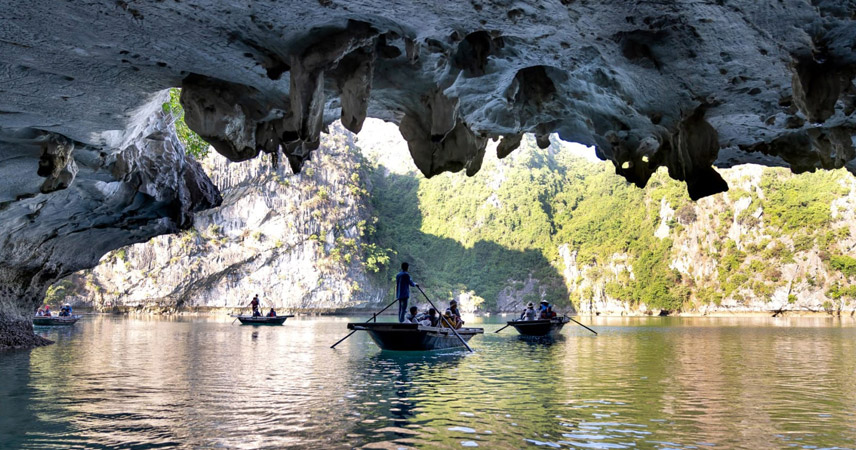
Route to explore Dau Go cave
Dau Go Cave is located on Dau Go Island, just a short boat ride from Tuan Chau Harbor in Halong Bay, Quang Ninh Province. It sits on the famous sightseeing route number 1, which includes some of the bay’s most iconic attractions. Its convenient location makes it a regular stop on most Halong Bay Cruises and classic itineraries.
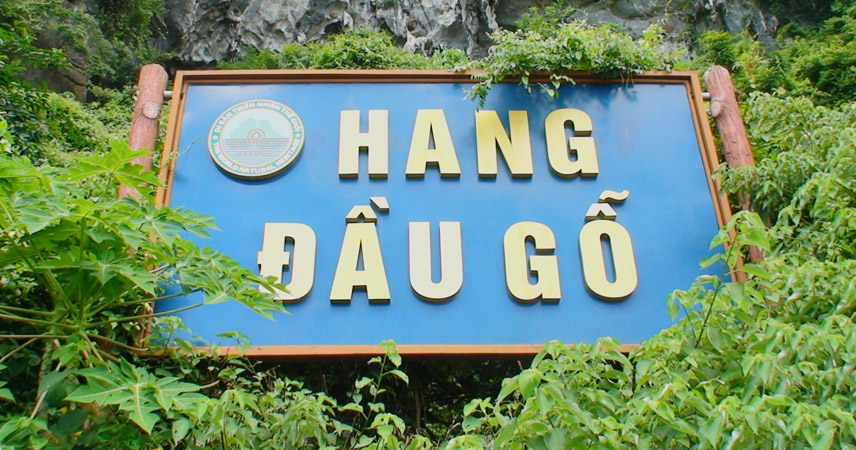
The name “Đầu Gỗ” literally means “Wooden Stakes Cave.” This unusual name is tied to Vietnam’s history. It recalls the legendary battle of the Bach Dang River in the 13th century, when General Tran Hung Dao used sharpened wooden stakes hidden beneath the water to defeat the Mongol fleet. According to locals, the leftover wooden pieces were stored inside this cave, and the name has remained ever since.
What sets Dau Go Cave apart is its size and its layered history. It is often described as one of the best caves in Halong Bay because of its massive chambers, towering stalactites, and its role in Vietnam’s cultural memory. With three main chambers, each with a unique atmosphere, the cave feels like a natural cathedral carved by time.
Dau Go Cave is not only a natural masterpiece but also a cultural treasure. In the 13th century, Vietnam was threatened by Mongol invasions. General Tran Hung Dao devised a brilliant strategy to block their advance along the Bach Dang River. He planted wooden stakes in the riverbed and lured the enemy fleet during high tide. When the tide receded, the Mongol ships were trapped and destroyed.
Legend has it that the leftover wooden stakes were hidden or stored in this very cave. The name Dau Go Cave has been linked to that historical episode ever since, and locals proudly view the cave as a symbol of resilience and ingenuity.
Culturally, Dau Go Cave has been a source of inspiration for poets and kings. Emperor Khai Dinh once called it the “Cave of Marvels” during his visit in 1917. Many Vietnamese poems and artworks celebrate the cave for its grandeur and connection to national pride.
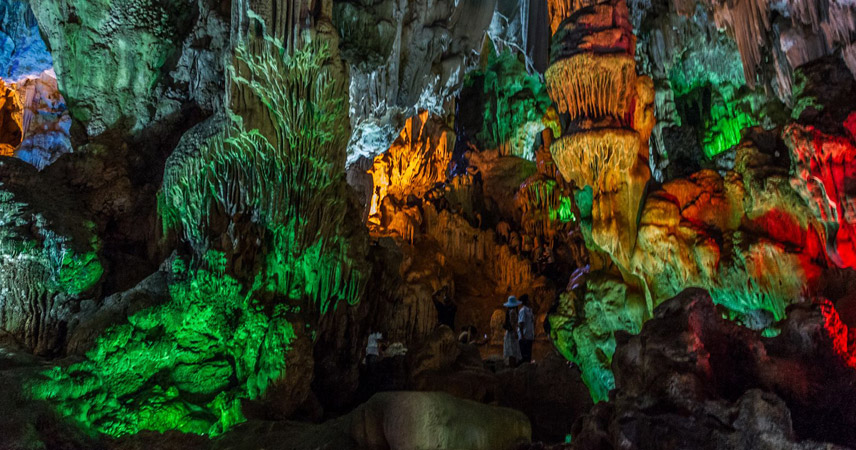
Image inside Dau Go Cave
The journey from Hanoi to Halong Bay takes about 2.5–3 hours by highway. Travelers can choose between buses, private cars, or organized transfers arranged by cruise companies. Many Vietnam Tour Packages include pickup from Hanoi’s Old Quarter for convenience.
Once in Halong, the main gateway is Tuan Chau Harbor. From here, you’ll hop on a cruise ship or day boat that follows sightseeing Route 1. Dau Go Cave is one of the key stops on this route, along with Thien Cung Cave and Fighting Cock Islet. The boat drops you off at the pier, and a short climb of about 90 stone steps leads you to the cave entrance.
The Dau Go Cave ticket price is included in Halong Bay’s Route 1 sightseeing ticket. As of now, the ticket costs around 290,000–300,000 VND per person (about 12–13 USD). This fee covers multiple attractions along the route, not just Dau Go Cave.
Almost all standard Halong Bay Day Cruises and overnight cruises include Dau Go Cave in their itinerary, especially those departing from Tuan Chau. Some private charter cruises may also allow you to customize and include this stop.
The cave is open daily from early morning (around 7:00 AM) until late afternoon (5:30–6:00 PM). Boats usually schedule visits during the day to make the most of the natural light streaming into the cave’s entrance.
Dau Go Cave is famous for its three main chambers, each offering a different experience:
The first chamber is the largest, with towering stalactites hanging like giant chandeliers. Sunlight seeps in through the entrance, illuminating the formations and giving the space a cathedral-like atmosphere. Visitors often feel overwhelmed by the size and natural artistry.
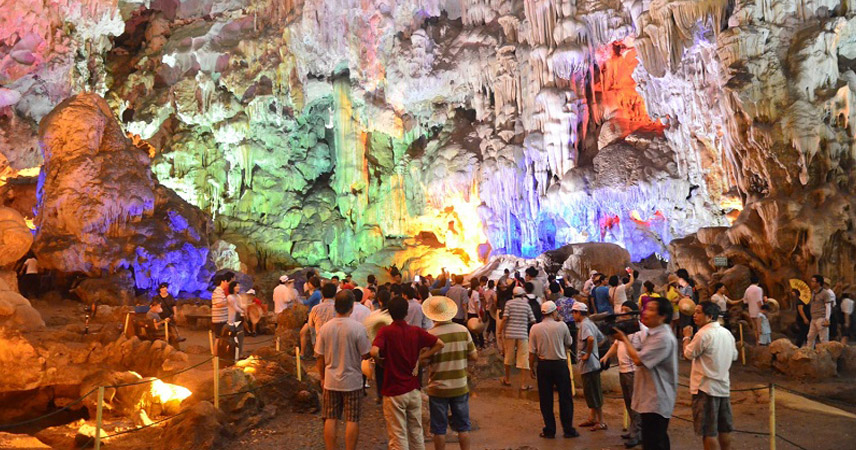
The interior space of Dau Go cave
As you move deeper, the second chamber reveals countless stalactites and stalagmites shaped like animals, plants, and mythological figures. With a bit of imagination, you might spot elephants, lions, or even a dragon hidden among the stones.
The innermost chamber feels mysterious and quiet, almost like a secret underground palace. The cool air and dim lighting create a calm atmosphere, making it the perfect spot to pause and soak in the beauty.
The most comfortable months are from March to May and from September to November, when the weather is mild and the skies are clear. Summer months (June–August) can be hot and crowded, while winter (December–February) may bring mist, which also adds a mysterious vibe.
The steps leading up to the cave are manageable but can be tiring for children or elderly visitors. Allow extra time, walk slowly, and use the railings. Inside the cave, the pathways are fairly even and safe.
Many travelers compare Dau Go Cave with Sung Sot (Surprise) Cave, the most famous cave in Halong Bay. Here’s how they differ:
If time allows, visiting both is highly recommended. Together, they are two of the best caves in Halong Bay and offer a well-rounded glimpse into geology and heritage.
.jpg)
Natural beauty inside the Dau Go cave
Visiting Dau Go Cave is easiest when included in a guided cruise. Here are the most common tour options:
Perfect for travelers with limited time. This short trip usually covers Dau Go Cave, Thien Cung Cave, and Fighting Cock Islet. Despite the short duration, it offers a good overview of Halong’s highlights. You’ll have enough time to climb into the cave, admire its three chambers, and take plenty of photos before heading to the next stop. It’s one of the most popular Halong Bay Day Cruises for those wanting a quick experience.
A half-day option that gives you more time to explore. Besides Dau Go Cave, you might visit Titop Island for a hike and a swim or kayak around Luon Cave. The pace is more relaxed, allowing you to enjoy both the natural formations and leisure activities. Lunch is often served on board.
For those with a full day, this itinerary lets you see multiple attractions, including Dau Go Cave, Thien Cung Cave, Titop Island, and sometimes even a kayaking spot or pearl farm. This option is ideal if you want a well-rounded Halong Bay experience without staying overnight, and is often highlighted in many Halong Bay Travel guides.
While not every overnight cruise stops at Dau Go Cave, many do on their first day. An overnight trip allows you to combine cave exploration with activities like squid fishing, cooking classes, and sunrise tai chi. If you’re traveling far to reach Halong, this is the best way to maximize your experience.
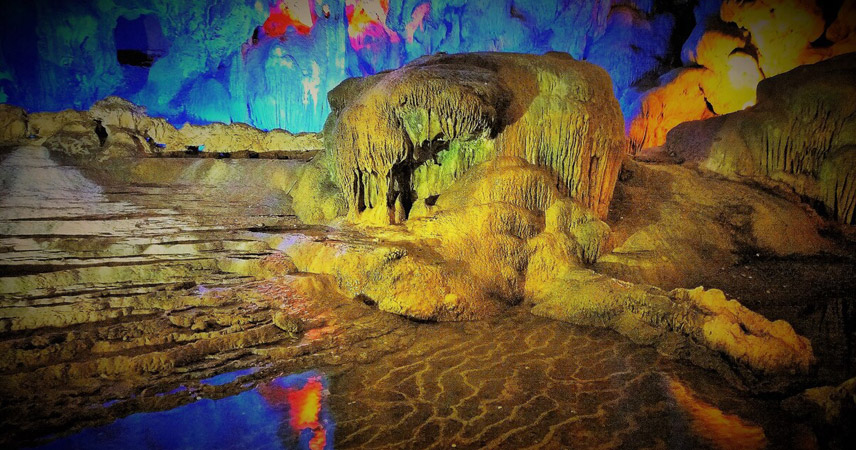
Nature's works of art in the Dau Go cave
For travelers who want flexibility, private charters can be arranged. These allow you to tailor your trip, choose exactly when to visit Dau Go Cave, and combine it with other less-visited attractions. Many high-end Luxury Halong Bay Cruises and custom Halong Bay cruises with Dau Go Cave packages offer this option, often featured in top Halong Bay Cruises.
Tip: Always check with your cruise operator whether Dau Go Cave is included in the itinerary, as some routes focus on different areas of the bay.
Dau Go Cave is more than just a stop on your Halong Bay journey - it’s a place where nature and history meet most impressively. From the towering stalactites to the legendary stories of Vietnam’s past, every corner of the cave offers something to marvel at.
When planning your Halong Bay adventure, be sure to include Dau Go Cave in your itinerary. Whether you join a short cruise, spend a full day on the bay, or choose a Luxury Halong Bay Cruises experience, the cave will leave you with memories that last a lifetime.
Don’t miss out, explore places to visit in Halong Bay, take advantage of the best Halong Bay Cruises, and book your journey with a trusted operator today. Step into the wonder that is Dau Go Cave with top-rated tours recommended in every Vietnam Travel Guide.
Its vast chambers, unique stalactite formations, and strong ties to Vietnamese history make it one of Halong Bay’s most fascinating caves. Few caves combine geology and culture as seamlessly as Dau Go.
Take a 2.5–3 hour ride on the Hanoi–Halong Expressway. From Tuan Chau Harbor, board a cruise boat following Route 1. The cave is one of the first major stops on this route.
Yes, entry is included in the Halong Bay Route 1 sightseeing ticket, which costs about 300,000 VND. This covers multiple attractions on the same route.
Most visitors spend 45 minutes to an hour inside. This allows enough time to walk through the three chambers, take photos, and listen to your guide’s stories.
Both have their charms. Sung Sot is bigger and more modernly lit, while Dau Go feels more authentic and historically significant. Ideally, visit both to appreciate the contrasts.
Absolutely. Many half-day and full-day cruises include the cave. It’s one of the highlights of Route 1, so chances are high your boat will stop here.
Spring (March–May) and autumn (September–November) are best, thanks to clear skies and comfortable temperatures. Summer brings more tourists, while winter adds misty, mystical views.
It covers thousands of square meters across three chambers. While not the largest, it’s among the top caves in terms of scale and diversity of formations.
Yes, almost all boats provide English-speaking guides. They explain the cave’s history, point out interesting formations, and help with photography tips.
Yes. Many 6-hour or full-day cruises visit both Dau Go Cave and Titop Island. It’s a popular pairing, letting you mix cultural history with beach time.
Yes, with some caution. The climb up the stairs can be tiring, but once inside, the pathways are manageable. Guides often assist elderly travelers or families with kids.
Yes, photography is allowed. Bring a camera with a wide lens if possible. The cave’s natural light combined with artificial spotlights creates dramatic effects.
It depends on the season. Mornings and late afternoons are usually quieter. Visiting outside of peak summer months offers a calmer experience.
Yes, it’s open daily, weather permitting. In case of storms, cruises may be canceled for safety reasons, so always check the forecast.
Please come back later and we will update soon. Try to search for other tours or use the go to homepage.
Go back to homepageExperience the best of Halong Bay with Halong Bay Cruises, where every journey is thoughtfully crafted to ensure a seamless and unforgettable vacation.
Flexible and risk-free booking. Booking features are designed to give you confidence when booking.
Local guides with extensive knowledge of the terrain. Traveling with us means you are exploring the Real Halong Bay.
We build strong relationships with the community to make positive and lasting contributions to local socio-economic progress.
We understand that sometimes things may not go as expected, and that's why we offer a guarantee to ensure your complete satisfaction.
Our extensive knowledge and experience allow us to provide guidance and recommendations, ensuring your journey is smooth and enjoyable.
Create trips that meet the needs of tourists while ensuring the conservation and restoration of resources for future tourism development.

4.9 Rating out of 5.0 based on


Need Help?
Our travel consultants are here to help 7 days a week, 8:30 am-6 pm.