Close


Halong Bay is widely known for its limestone islands and calm waters, but an important part of the experience lies inside its extensive cave systems, a topic frequently explored in destination guides by Halong Bay Cruises. Formed over millions of years through natural erosion, the caves in Halong Bay provide valuable insight into the area’s geological history as well as its natural landscape.
Cave exploration is a standard activity included in many Halong Bay Cruises, offering visitors the opportunity to experience different types of caves, from large walk-in chambers to smaller grottoes accessed by kayak or bamboo boat. Each cave presents distinct characteristics in terms of size, layout, and accessibility.
This blog introduces the most well-known caves in Halong Bay, explains what visitors can expect at each site, and offers practical information to help travelers choose the caves that best suit their interests and travel plans.

Overview of Halong Bay
The fame of Halong Bay’s caves comes from a perfect combination of natural formation, accessibility, and cultural meaning, making them a core highlight on many well-designed Halong Bay Tours.
A geological masterpiece millions of years in the making
The caves in Halong Bay were formed through a long process of limestone erosion caused by rainwater, underground streams, sea-level changes, and tectonic movements. Over millions of years, water slowly dissolved the limestone, creating hollow chambers, tunnels, and dramatic formations.
Inside the caves, visitors can see:
Easy to explore, even for first-time travelers
Unlike many cave systems around the world that require technical equipment, most caves in Halong Bay are easy to access. Well-maintained steps, walkways, and lighting systems make them suitable for travelers of all ages. Many caves are included in standard cruise itineraries, meaning you don’t need to plan extra logistics to visit them, reinforcing their status as true must-visit attractions in Halong Bay.
Legends, history, and cultural depth
Beyond natural beauty, many caves are tied to Vietnamese legends, folklore, and history. Stories of dragons, heavenly palaces, heroic battles, and ancient life give these caves emotional depth, turning a simple visit into a cultural journey.
Discover Sung Sot Cave
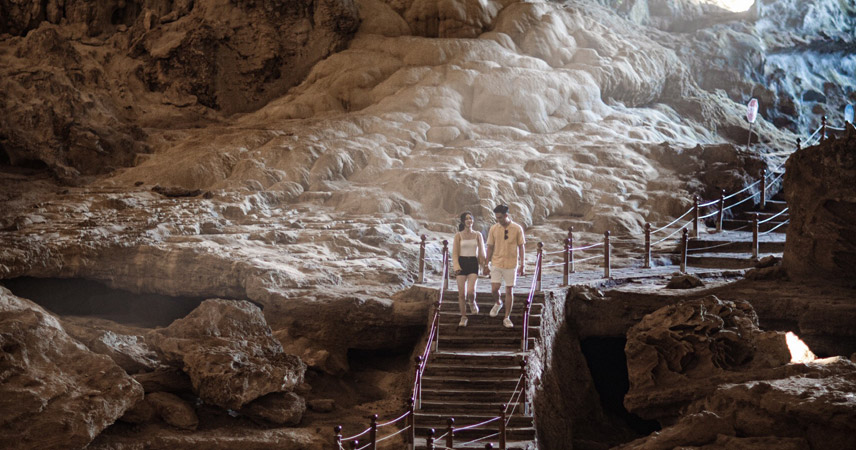
Sung Sot Cave, also known as Surprise Cave, is the most famous and the largest cave in Halong Bay, and for good reason. Nearly every visitor who steps inside is genuinely surprised by its sheer size, making it a highlight on many Halong Bay Luxury Cruises designed to showcase the bay’s grandest landmarks.
What makes Sung Sot Cave so impressive?
Covering an area of over 10,000 square meters, Sung Sot Cave consists of two massive chambers connected by a short passage. As you climb the stone steps from Bo Hon Island and enter the cave, the space gradually opens up, revealing a vast interior that feels more like a natural palace than a cave.
Highlights include:
The lighting inside the cave is subtle yet effective, enhancing the textures and shapes of the limestone without overpowering its natural beauty.
Best for: Sung Sot Cave is ideal for first-time visitors, photography lovers, and travelers who want to experience one of the most iconic and impressive natural attractions in Halong Bay, whether visiting on short Halong Bay Day Cruises or longer itineraries.
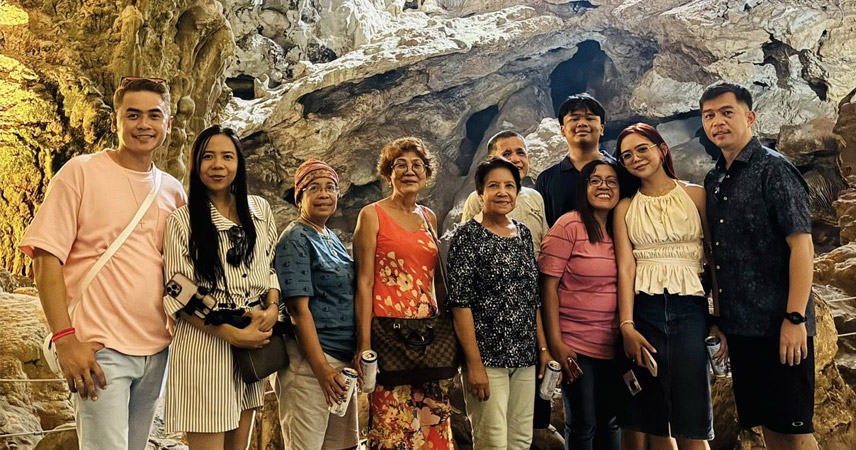
Thien Cung Cave, often called Heavenly Palace Cave, feels like stepping into a dream. Compared to the massive scale of Sung Sot Cave, Thien Cung focuses more on detail, atmosphere, and storytelling, and it is frequently featured on well-curated Halong Bay Luxury Cruises that highlight the bay’s most visually striking sites.
Visit Thien Cung Cave
A cave filled with legends
According to local legends, Thien Cung Cave was once the site of a grand wedding between a Dragon King and a beautiful maiden. The walls and ceilings are said to depict scenes of celebration, dancing figures, and mythical creatures. If you look closely, your imagination can easily bring these stories to life.
Visual highlights inside Thien Cung Cave
Unlike some caves that feel dark or mysterious, Thien Cung has a bright, almost magical atmosphere, making it especially appealing to couples and travelers who enjoy scenic exploration, whether they are visiting on a short Halong Bay Cruise 1 Night itinerary or a longer journey.
Best for: Thien Cung Cave is perfect for couples, romantic travelers, and visitors who enjoy fairy-tale scenery, legends, and visually striking cave interiors.
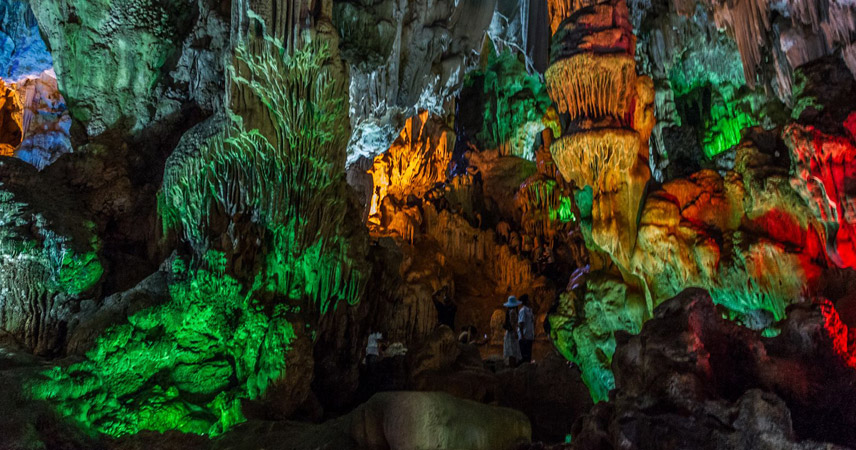
Dau Go Cave offers a different kind of experience by blending natural beauty with historical significance. Located close to Thien Cung Cave, it’s often visited in combination with it on well-planned Halong Bay Tours that focus on both culture and scenery.
The story behind the name
The name “Dau Go,” meaning Wooden Stakes, is linked to Vietnam’s resistance against Mongol invaders in the 13th century. According to legend, wooden stakes used in naval battles were once stored inside this cave, giving it a powerful historical identity.
What you’ll see inside Dau Go Cave
The cave feels quieter and more reflective, making it ideal for travelers who appreciate history and storytelling alongside nature, especially those enjoying a slower pace on Halong Bay Cruise 2 Nights itineraries.
Best for: Dau Go Cave is best suited for history lovers, cultural travelers, and visitors who enjoy learning about Vietnam’s past while exploring natural landscapes.
Explore Dau Go Cave
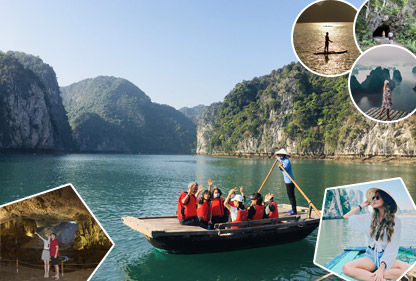
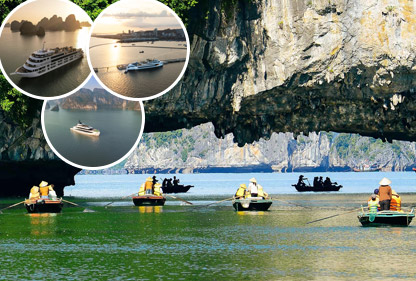
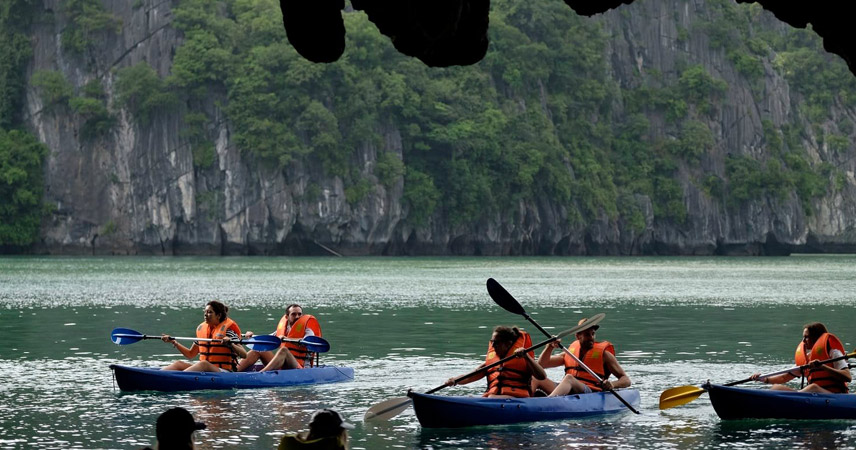
Luon Cave offers a completely different experience from the walk-in caves of Halong Bay. Instead of climbing steps and exploring on foot, visitors enter this cave by kayak or traditional bamboo boat, gliding gently through a low tunnel carved into the limestone, an activity commonly included on relaxed Halong Bay Day Cruises.
What makes Luon Cave special?
The cave itself is a short, arched passage that opens into a hidden lagoon surrounded by steep limestone cliffs and lush greenery. Once inside, the atmosphere feels calm, enclosed, and surprisingly quiet, far removed from the busier cruise routes often seen on larger Halong Bay Cruises.
Highlights include:
Because motorized boats cannot enter, Luon Cave feels more intimate and environmentally friendly, making it a favorite stop for travelers who enjoy slow, nature-focused activities.
Best for: Luon Cave is ideal for kayaking enthusiasts, eco-conscious travelers, and visitors who want a peaceful, immersive experience close to nature.
Discover Luon Cave by kayaking
Trinh Nu Cave is one of the most atmospheric caves in Halong Bay, known not only for its natural beauty but also for the romantic and emotional legend associated with it, and it is often highlighted on refined Halong Bay Luxury Cruises that focus on quieter, more intimate stops.
The legend behind Trinh Nu Cave
According to local folklore, the cave is named after a young woman who waited faithfully for her lover while gazing out to sea. Her story has made Trinh Nu Cave a symbol of love, loyalty, and quiet strength, adding a deeply human element to the visit.
What you’ll find at Trinh Nu Cave
Trinh Nu Cave is often included in overnight cruise itineraries, allowing visitors to enjoy the area at a slower pace, sometimes combined with swimming or beach activities nearby.
Best for: Trinh Nu Cave is perfect for couples, romantic travelers, and those joining overnight cruises who prefer a quieter and more intimate cave experience.
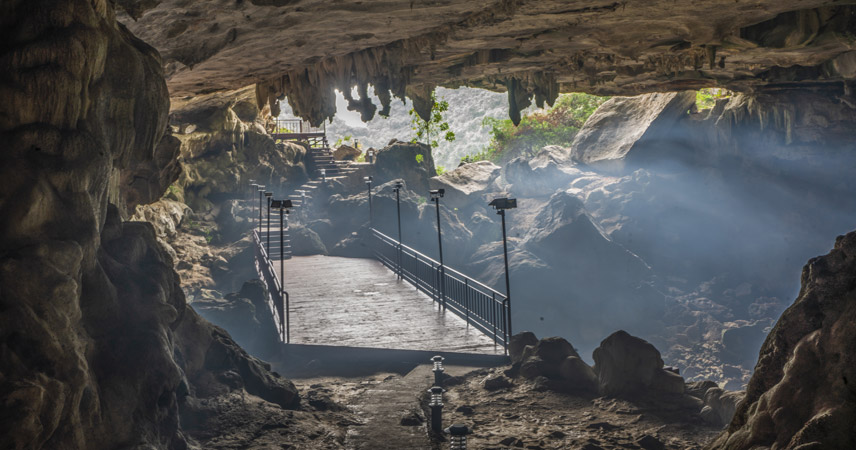
Visit Trinh Nu Cave
Me Cung Cave, which translates to “Maze Cave,” is one of the lesser-known caves in Halong Bay, yet it offers one of the most intriguing explorations for curious travelers.
Why does Me Cung Cave feel different
Unlike the grand openness of Sung Sot Cave, Me Cung Cave features narrower pathways and a more complex internal layout. Walking through it feels like solving a natural puzzle, with each turn revealing new chambers and viewpoints.
Inside and around Me Cung Cave, visitors can see:
The cave’s elevated exit leads to a stunning panorama of the bay, rewarding explorers with one of the quieter yet most scenic views in the area.
Best for: Me Cung Cave is best suited for adventure seekers, independent travelers, and visitors who enjoy exploring less crowded, off-the-beaten-path attractions.
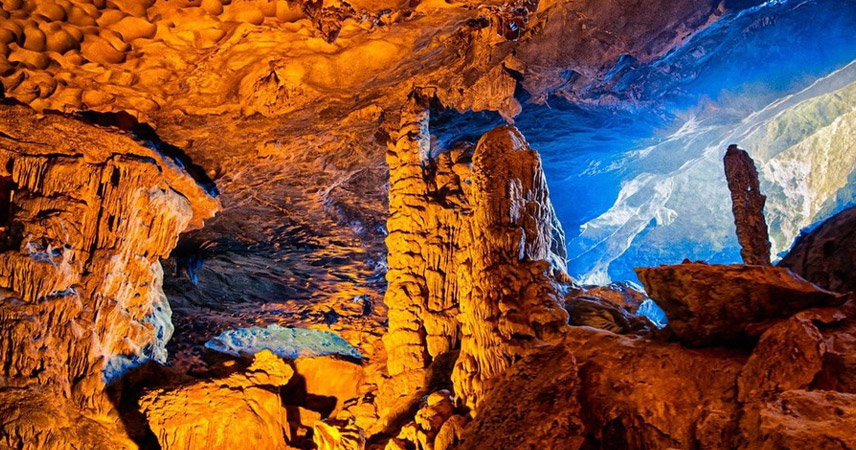
Discover Me Cung Cave
The best time to explore the caves in Halong Bay largely depends on weather conditions, visibility, and crowd levels, aligning closely with the overall best time to visit Vietnam for outdoor sightseeing. While the bay is beautiful year-round, certain months offer a much more comfortable and enjoyable cave experience.
From March to May, the weather is generally mild with clear skies and moderate temperatures. This is one of the best periods for cave exploration, as the limestone formations are well-lit by natural light, and walking conditions inside the caves are pleasant.
Another excellent time is September to November, when temperatures are cooler, and crowds are thinner compared to peak summer months. The sea is usually calm, making cruise routes and kayaking activities, especially at caves like Luon Cave, more enjoyable.
Travelers should be cautious during July and August, as this is the rainy and storm season in northern Vietnam. Heavy rain or strong winds may cause cruise itineraries to change, and some cave visits can be temporarily suspended for safety reasons.
In short, spring and autumn are ideal for visiting the caves in Halong Bay, offering the best balance between weather, scenery, and comfort.
Exploring the caves in Halong Bay is generally easy and suitable for most travelers, but a few simple preparations can greatly enhance your experience. From safety and comfort to photography and cruise selection, the tips below will help you enjoy Halong Bay’s caves in the most relaxed and rewarding way, especially if you are comparing itineraries featured in guides like Top 7 Halong Bay Luxury Cruises.
Seeing Halong Bay from the deck of a cruise is undeniably beautiful, but stepping inside its caves reveals a deeper, more intimate side of this legendary landscape, even for travelers experiencing the bay on classic Halong Bay Cruises. Within these limestone chambers, the bay feels quieter, older, and more mysterious, almost as if time itself has slowed down.
Each cave offers a different mood and memory. Some impress with their sheer scale, others invite reflection through silence and legend, while a few reward curiosity with hidden lagoons and panoramic views. Together, they form a journey that goes beyond sightseeing and becomes a genuine connection with nature’s long history.
For travelers who want to truly understand why Halong Bay is considered one of the world’s great natural wonders, exploring its caves is not just an optional activity; it is an essential part of the experience, thoughtfully brought together through curated journeys by Halong Bay Cruises.

Nuly - Halong Bay Cruises
Vietnam travel experts · Est. 2013 · Based in Hanoi
Our team of local specialists has guided travellers from 50+ countries across northern Vietnam. Every itinerary is personally researched and led by passionate, professional guides who call this region home.
Visiting Sung Sot Cave involves climbing approximately 100 stone steps from the pier to the cave entrance. The ascent is moderate and suitable for most travelers with normal mobility. Handrails and resting points are available along the path for added comfort.
Yes, at Luon Cave, visitors can usually choose between kayaking independently or taking a traditional bamboo boat rowed by a local. Both options allow access to the cave tunnel and lagoon. Life jackets are provided, and guides are present for safety.
Swimming is often permitted near Trinh Nu Cave when weather and sea conditions are favorable. Many overnight cruises schedule time for swimming at the nearby beach area. Guests should always follow crew instructions and wear appropriate swimwear for safety.
Some caves, such as Sung Sot and Dau Go, require stair climbing and uneven walking surfaces. Travelers with knee or mobility concerns should inform their cruise operator in advance. Alternative activities or less physically demanding caves may be recommended.
Most cruises allocate between 30 and 60 minutes per cave, depending on its size and popularity. Larger caves like Sung Sot may require more time, while smaller caves are visited more briefly. Schedules are designed to balance exploration and relaxation.
Touching stalactites and stalagmites is strictly discouraged. These formations are extremely fragile and take thousands of years to develop. For conservation reasons, visitors are required to stay on marked paths and avoid physical contact with the cave walls.
Light rain usually does not affect cave visits, as most caves are sheltered. However, during heavy rain or strong winds, some cave activities, especially kayaking, may be canceled for safety reasons. Cruise operators will adjust itineraries accordingly.
Children are generally allowed to kayak if accompanied by an adult and have obtained approval from the cruise operator. Safety equipment is mandatory, and age or height restrictions may apply. Families can also choose bamboo boats as a safer alternative for young children.
Visitors should bring comfortable walking shoes, a small bag, drinking water, and a camera or phone. A light jacket is recommended, as caves can be cooler inside. Valuables should be kept secure, especially during kayaking activities.
Yes, licensed tour guides usually accompany visitors during cave excursions. They provide explanations about geological formations, local legends, and historical significance. This guided interpretation greatly enhances the overall cave exploration experience.

Need Help?
Our travel consultants are here to help 7 days a week, 8:30 am-6 pm.